Door-to-Door Car Shipping: The Complete 2026 Guide
Door to door car shipping explained in plain English: what it costs, how long it takes, and how to verify a carrier before you book.
Door-to-door car shipping means the carrier collects your vehicle at your origin address and delivers it to your destination address, with no terminal drop-off, no storage lot, and no second trip. It is now the default method for the large majority of vehicle shipments in the United States, and most brokers quote it without being asked.
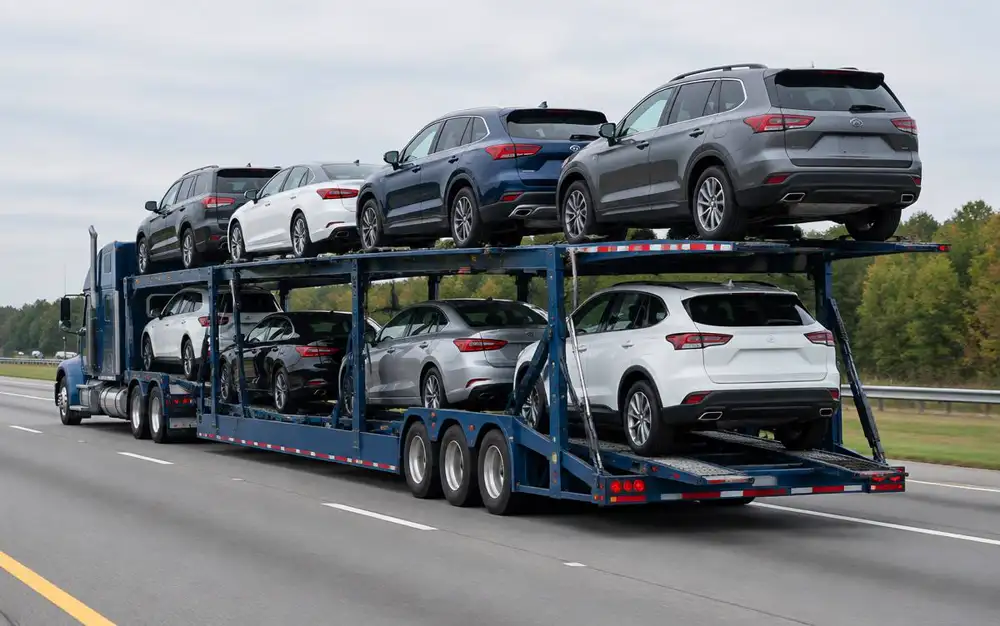
How door-to-door car shipping works
Whether you book with a broker or directly with a carrier, a door-to-door car shipping service follows the same four steps.
- Quote and route pricingYou provide both addresses, the vehicle's year, make, and model, whether it runs, and your dates. A broker or carrier prices the lane on distance, route density, and demand. Ask for an itemized quote that separates the carrier's rate from any broker fee, and confirm open transport or enclosed transport.
- Carrier assignment and dispatchA broker offers your vehicle to a carrier from its own vetted network or a public load board. Once a carrier accepts, dispatch confirms a pickup window, usually a one to three day span rather than a fixed hour. You should receive the carrier's legal name, USDOT number, and the driver's phone number.
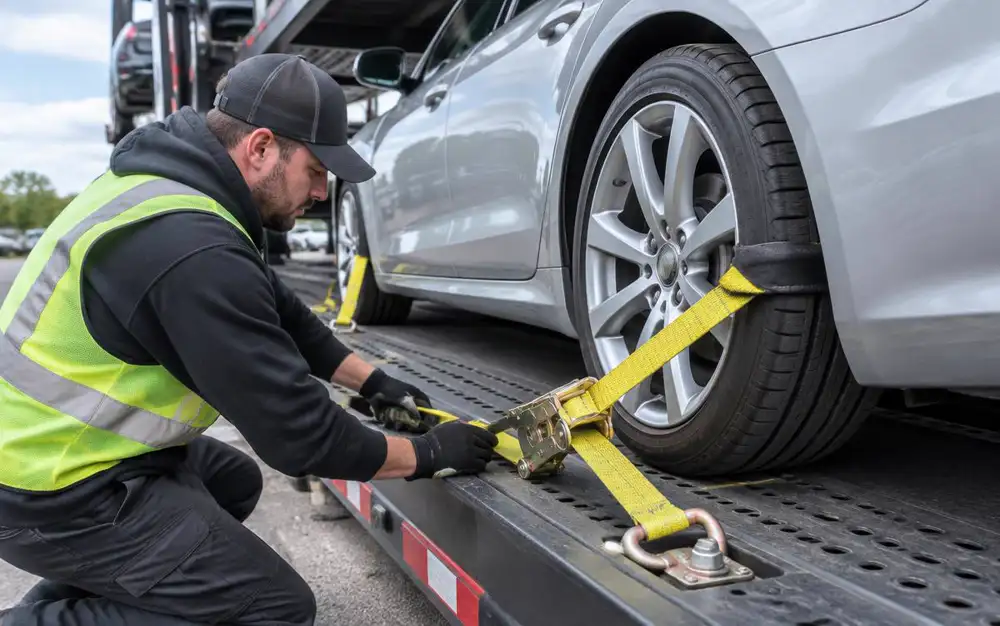
- Pickup with pre-transport inspectionThe driver walks the vehicle with you and records every existing scratch, dent, and chip on the Bill of Lading. You both sign it. The driver then loads the car onto the car hauler, most often a stinger-steered trailer carrying seven to ten vehicles, and secures it with wheel straps or chains.
- Delivery with final inspectionThe driver unloads and you compare the vehicle against the pickup record before signing the delivery copy of the Bill of Lading. Any balance owed to the carrier is usually settled with the driver. Transit time depends on distance and on the other stops on the same trailer.
Door-to-door vs terminal-to-terminal
Terminal-to-terminal shipping asks you to drop the vehicle at a carrier depot and collect it from another depot near your destination. The differences in practice are larger than the two names suggest.
| Factor | Door-to-Door | Terminal-to-Terminal |
|---|---|---|
| Collection point | Your address, or the nearest legal and safe spot | A carrier depot you drive to, often 20 to 60 miles away |
| Delivery point | Your destination address | A depot near the destination; you arrange the last leg |
| Storage fees | None | Commonly $15 to $35 per day after a short grace period |
| Number of load and unload cycles | One load, one unload | Two or more, as the vehicle changes trailers or lots |
| Scheduling | Pickup window agreed with dispatch; driver calls ahead | Depot hours only; vehicle waits for the next available truck |
| Typical total cost | $700 to $1,500 for most routes | A slightly lower base rate, plus storage and your own travel |
| Best suited for | Nearly all private moves, relocations, and online purchases | Flexible timelines, dealer fleets, and port hand-offs |
On a total-cost basis door-to-door is usually the cheaper option once you count terminal storage fees and the time and fuel spent getting to and from two depots. The lower headline price of terminal-to-terminal rarely survives a real trip.
What "door" actually means
A fully loaded car hauler is 75 to 80 feet long and can weigh up to 80,000 pounds. There are streets it physically cannot enter. The driver will get as close to your address as is legal and safe. Where the truck cannot reach the door, the driver will arrange a meeting point at a large nearby lot, usually a supermarket or shopping center within a few minutes' drive.
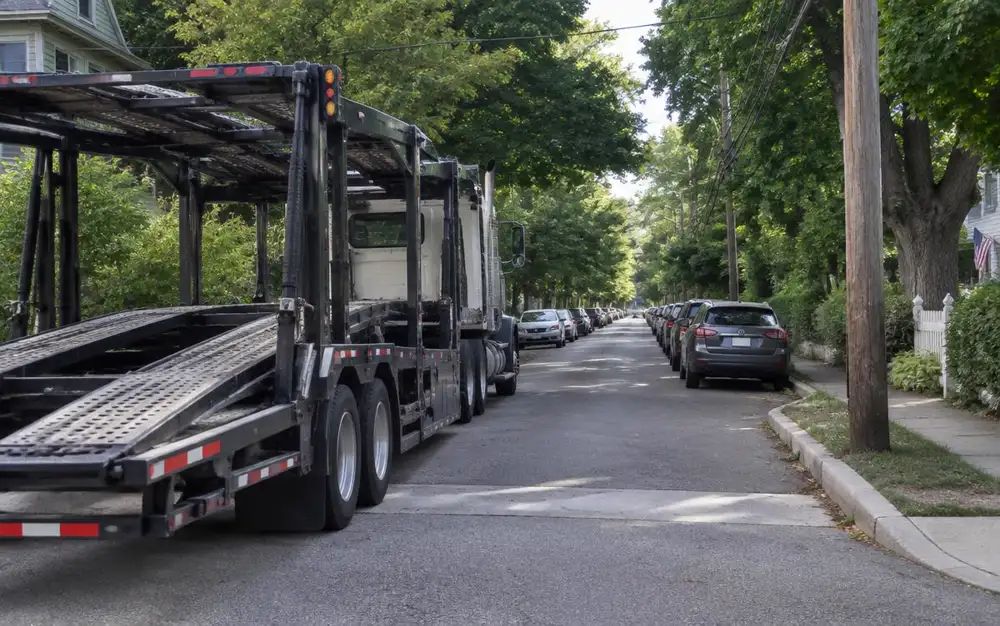
The common causes are predictable, and most of them are visible on a satellite map:
- Narrow residential streets and tight cul-de-sacs with no turning radius
- Low-hanging branches or overhead utility cables below trailer clearance
- Weight-restricted roads and bridges, or posted no-truck routes
- HOA or municipal restrictions on commercial vehicles in residential areas
- Steep driveways, speed bumps, and gated complexes with limited access
Curb clearance matters as well; a low sedan on the bottom deck can scrape on a steep apron even when the truck fits. If you live in a gated community, on a cul-de-sac, or under an HOA restriction on commercial trucks, say so when you request the quote. A good provider tells you about access limitations at quote stage rather than on the day of pickup.
What door-to-door car shipping costs
Pricing is set per route rather than per mile, and the per-mile figure falls as distance grows.
| Distance | Open Transport | Enclosed Transport |
|---|---|---|
| Under 500 miles | $400 to $700 | $700 to $1,100 |
| 500 to 1,000 miles | $600 to $900 | $1,000 to $1,500 |
| 1,000 to 2,000 miles | $800 to $1,200 | $1,300 to $1,900 |
| 2,000+ miles (coast to coast) | $1,000 to $1,600 | $1,700 to $2,400 |
Ranges are estimates for a standard operable sedan. Actual pricing varies by route demand, season, vehicle dimensions, and carrier availability.
Six factors move a door-to-door car transport quote up or down from those ranges.
Route density
Popular lanes between large metro areas cost less per mile because carriers can fill the trailer in both directions. A move that ends in a small town two hours from the interstate prices higher.
Vehicle size and weight
A full-size pickup or three-row SUV takes space that could hold a second sedan and pushes the trailer toward its weight limit. Expect $100 to $300 above the sedan rate for large vehicles.
Operable vs inoperable condition
An inoperable vehicle has to be winched onto the trailer, which needs equipment not every truck carries. Most carriers add $100 to $200 for a car that does not start, steer, or brake.
Open vs enclosed
Enclosed transport costs 40 to 60 percent more because a covered trailer holds fewer cars. It suits classic, exotic, and freshly restored vehicles; for a daily driver, open transport is what dealers use.
Season
Snowbird season is the largest swing of the year. Routes into Florida and Arizona spike from October through March, and the reverse routes spike from April through June as vehicles head back north.
How far in advance you book
One to two weeks of lead time lets dispatch place your car on a truck already running the lane. A day or two of notice usually means paying for expedited shipping.
The Bill of Lading
At collection the driver completes a Bill of Lading. It records the vehicle's condition, the mileage, and the agreed terms, and both parties sign it. The same document is signed again at delivery after a second inspection. If damage occurs in transit, the difference between those two inspections is what any claim rests on.
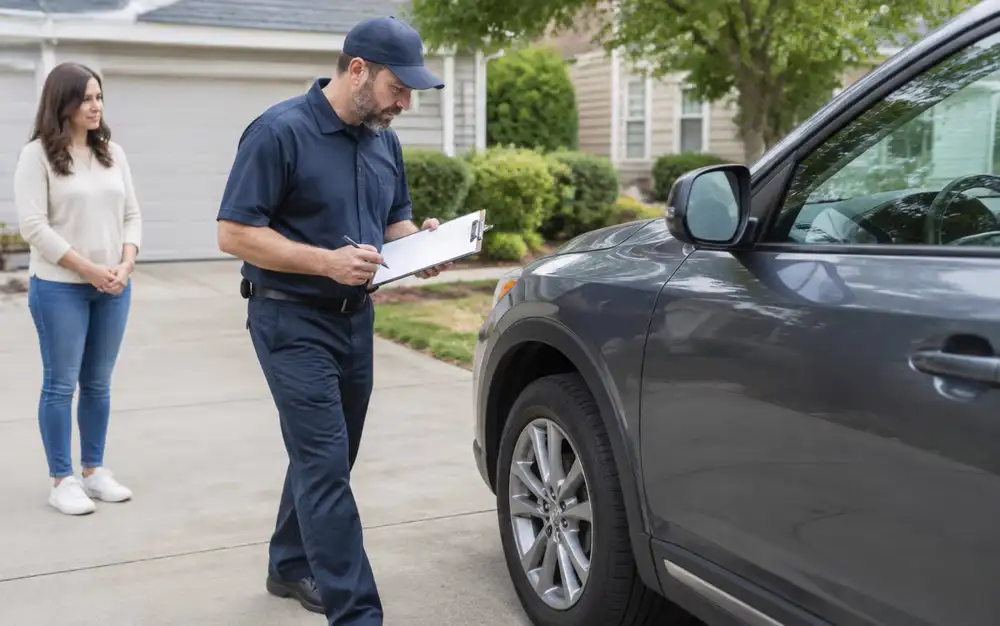
Three habits protect you:
- Photograph the vehicle from every angle at both ends, in daylight, with timestamps on. Include the odometer, the roof, and the wheels.
- Never sign a delivery Bill of Lading marked clean until you have physically walked the car. Note any new damage on the form before you sign, even if the driver is in a hurry.
- Keep your copy of the pickup inspection, on paper or as a photo, until the vehicle is delivered and any claim is closed.
Insurance, and what it actually covers
Here is the distinction most shoppers get wrong. The liability insurance that federal rules require every carrier to hold protects the public from the truck. It does not cover your vehicle on the trailer. Your vehicle is covered under the carrier's separate cargo insurance policy, which has its own limit.
Federal cargo minimums can be well below the replacement value of a modern vehicle, and one policy limit may be shared across every car on the trailer. Before you book, confirm the actual per-vehicle limit in writing. Some brokers carry contingent cargo coverage as a second layer that responds if the carrier's insurer denies a valid claim.
Broker vs carrier, and how to verify either one
Most companies advertising car shipping are brokers that match you with a third-party carrier. This is legal and normal, and it is how most door-to-door auto transport gets arranged, because no single carrier runs every lane. The catch is that the quality of your transport depends on which carrier gets assigned.
The practical question to ask is whether the company assigns from a vetted private network or from an open public load board where any carrier with active authority can claim the job.
Verify any company, broker or carrier, in five steps:
- Ask for the company's USDOT number and MC number.
- Look both up in the FMCSA Company Snapshot database run by the Federal Motor Carrier Safety Administration.
- Confirm the operating authority is active and the entity type matches what they told you (broker or carrier).
- Confirm the cargo insurance limit in writing, per vehicle.
- Refuse any request for a large deposit before a carrier is actually assigned.
Choosing a door-to-door provider
What separates a good door-to-door car transport experience from a stressful one is rarely the price. It is upfront honesty about access limitations at your specific address, an itemized quote rather than a single bundled number, a named point of contact through transit, and verifiable federal authority. A company that cannot or will not show its numbers has not earned a deposit.
Licensed brokers that publish their federal authority upfront make this easier to check. Dispatch Dudes, for example, lists USDOT 3446819 and MC-1120978 on every page of its site and states access limitations at quote stage rather than on pickup day. Whoever you choose, hold them to the same standard.
Frequently asked questions
How much does door-to-door car shipping cost?
Door-to-door car shipping costs $700 to $1,500 for most routes when the vehicle is a standard operable sedan on open transport. Short regional moves under 500 miles often come in at $400 to $700, while coast-to-coast open transport runs $1,000 to $1,600. Enclosed transport adds roughly 40 to 60 percent. Route density, season, vehicle size, and how far ahead you book all move the final number.
Is door-to-door shipping actually delivered to my front door?
Door-to-door shipping delivers to your address whenever the truck can legally and safely reach it, which covers most suburban and rural homes with reasonable street access. A loaded car hauler is 75 to 80 feet long, so narrow streets, low branches, weight limits, and gated communities can block it. In those cases the driver arranges a meeting point at a large nearby parking lot, usually within a few minutes' drive.
How long does door-to-door vehicle transport take?
Door-to-door vehicle transport takes 1 to 3 days for trips under 500 miles and 7 to 10 days for a coast-to-coast move. Add the pickup window, typically one to three days, to get the full timeline from booking to delivery. Drivers carry several vehicles with different stops, so transit time depends on the route as well as the mileage. Expedited shipping is available at a premium if you need a fixed date.
What insurance covers my car during transport?
Your car is covered by the carrier's cargo insurance while it is on the trailer, not by the liability insurance that federal rules require for the truck itself. Cargo policies have a per-vehicle limit that may be lower than the replacement value of a newer car, so ask for that limit in writing before you book. Some brokers add contingent cargo coverage as a second layer if the carrier's insurer denies a valid claim.
Do I need to be present for pickup and delivery?
You or a designated adult needs to be present at both pickup and delivery to inspect the vehicle and sign the Bill of Lading. The person does not have to be the owner, but they should be someone you trust to walk the car carefully and refuse to sign a clean report if the condition has changed. Carriers will not leave a vehicle unattended without a signed release.
What is the difference between open and enclosed door-to-door transport?
Open transport carries your car on an uncovered trailer alongside several others, while enclosed transport places it inside a covered trailer that shields it from weather and road debris. Open transport is the industry default and costs less because more vehicles share the trip. Enclosed transport is the sensible choice for classic, exotic, or high-value cars, and it usually comes with a higher cargo insurance limit.
Can I ship personal items in the vehicle?
Most carriers allow up to about 100 pounds of personal items in the trunk or below the window line, but the items are not covered by cargo insurance and federal rules do not treat car haulers as household goods movers. Anything visible or heavy can be refused at pickup or add a fee. Remove valuables, documents, toll transponders, and anything you would be upset to lose.
Is door-to-door car shipping available to Hawaii and Alaska?
Door-to-door car shipping to Hawaii and Alaska is available only for the overland portion of the trip; the ocean leg runs port-to-port on a roll-on, roll-off vessel. A carrier collects the vehicle at your address and delivers it to the departure port, and a second carrier can meet it at the arrival port. Expect a longer transit time, two separate Bills of Lading, and strict rules on personal items and fuel level.